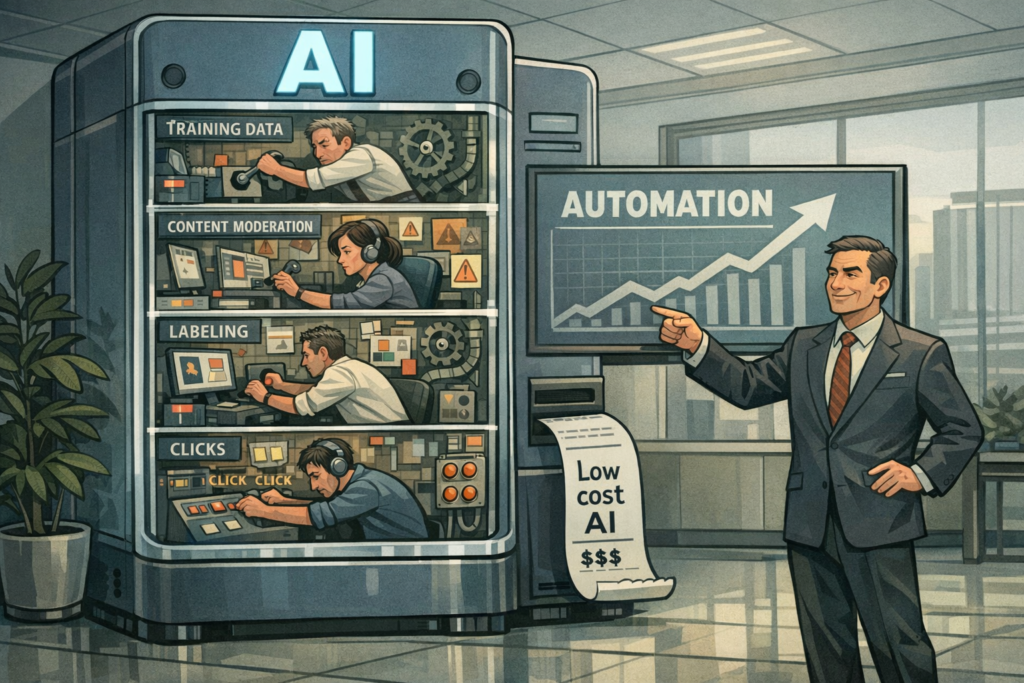

There’s a growing cultural and commercial tug-of-war over a deceptively simple question: should machines write what people read? When a professional columnist publicly refuses to hand their words over to a generative AI, it becomes more than a personal stance — it’s a signal that the economics, ethics, and identity of journalism and content creation are being renegotiated. This matters because the stakes include trust, creative ownership, and the livelihoods of millions working in newsrooms, marketing agencies, and creative industries.
What happened
A prominent columnist declared they would not use generative AI to write their work, framing it as an act of professional and ethical resistance. The statement highlighted concerns about authenticity, accuracy, and the commodification of voice — and it coincided with industry moves to incorporate AI for drafting, editing, personalization, and cost reduction. The episode crystallizes a broader industry debate: how to balance the capabilities of large language models (LLMs) with the values and work of human creators.
Why this matters for the AI industry
At first glance, a single columnist’s choice might seem symbolic. In reality, it amplifies three structural tensions shaping the evolution of AI in media and publishing.
- Trust vs. scale: Generative AI enables rapid production of articles, summaries, and social posts at scale, but automated content can dilute trust if errors, bias, or plagiarism proliferate.
- Augmentation vs. replacement: Companies must decide whether AI will be used to augment human creativity (assistive tools) or to replace jobs entirely (content factories and cost cutting).
- Transparency and provenance: Audiences and regulators increasingly demand clarity on whether content is machine-assisted, who owns the output, and how it was produced.
For the AI industry, balancing these factors will determine adoption curves, regulatory responses, and the public reputation of AI companies. A backlash from influential creators — writers, journalists, academics — can slow business models that rely on entirely machine-generated content and push the market toward hybrid solutions emphasizing human oversight.
Who benefits
Generative AI has clear winners:
- Large platforms and publishers that can deploy AI to increase output, personalize content, and reduce marginal costs for templated reporting (earnings recaps, sports scores, weather updates).
- Marketing and SEO agencies that use AI to produce high volumes of targeted material quickly, improving campaign velocity and lowering production budgets.
- Small businesses and creators who gain access to powerful writing and design tools previously out of reach due to cost or lack of expertise.
- AI vendors offering content-as-a-service, tuneable LLMs, and plug-and-play automations that scale well across markets.
Who is threatened
The introduction of LLMs into content ecosystems creates several risk vectors:
- Freelance writers and junior reporters: Roles focused on routine content synthesis and listicle-style pieces are most exposed to replacement or downward price pressure.
- Editorial quality control: Fact-checkers and copy editors may face job redefinition as platforms automate surface-level edits while increasing need for deep verification skills.
- Local news outlets: Smaller publishers with limited budgets either adopt imperfect AI solutions or fall behind when competing against AI-amplified competitors.
- Public trust in media: As AI-generated misinformation becomes easier to produce, established outlets risk losing credibility if they rely too heavily on automation without clear disclosure.
Market implications and business impact
The commercial consequences are already visible and will intensify across several areas.
Revenue models
Ad-supported publishers could see margins improve when AI lowers content production costs, but ad revenue is tied to engagement and trust. If quality or credibility declines, so will monetization. Conversely, subscription and membership models that emphasize exclusive, human-created journalism may become more valuable as differentiators.
Operational efficiency
Newsrooms and content teams can reallocate resources by using AI for routine tasks (transcription, summarization, SEO optimization). That can raise productivity but will also necessitate investment in AI governance, editor training, and verification workflows.
Competition and consolidation
Smaller publishers may license AI content or partner with platforms, driving consolidation as technology-savvy players outcompete legacy outlets. At the same time, new business models can emerge: verification-as-a-service, human-in-the-loop editorial platforms, and provenance tracking tools that command premium pricing.
Real-world use cases
Generative AI is not a monolith. Practical applications range from mundane efficiency gains to radical personalization:
- First-draft generation: Reporters use AI to create initial drafts, outlines, or interview transcripts, lowering the time from reporting to publication.
- Localization and translation: Media companies deliver regionally tailored versions of the same story, enabling scale across languages without proportional increases in cost.
- SEO and content marketing: Agencies use AI to generate keyword-rich blog posts, meta descriptions, and social copy to boost organic reach.
- Automated briefings: Corporations and investors receive concise, AI-generated daily briefs synthesized from multiple sources for quick decision-making.
- Personalized newsletters: Publishers create individualized reading experiences that increase engagement by aligning content with reader preferences.
Future predictions and expert recommendations
The landscape over the next 3–5 years will likely evolve along several predictable lines:
- Hybrid workflows will dominate: Most reputable outlets will adopt human-in-the-loop editorial models where AI handles routine tasks and humans ensure accuracy, tone, and investigative depth.
- Regulation and labeling: Expect mandates or industry standards requiring disclosure when content is AI-assisted, along with provenance tracking to deter misuse.
- New job categories: Roles like AI editors, verification analysts, and prompt engineers will expand; traditional roles will shift toward tasks that emphasize judgment, context, and domain expertise.
- Quality differentiation becomes a marketable asset: Premium publishers will emphasize human authorship, investigative rigor, and editorial integrity as competitive advantages.
- Detection and watermarking tech: Tools that detect or embed machine-origin signals will grow more sophisticated, driving an arms race between generation and verification.
For organizations integrating AI, here are pragmatic steps to mitigate risk and preserve value:
- Adopt transparency policies: Clearly label AI-assisted work and explain the role of AI in production.
- Invest in human oversight: Train editors to critique AI output and prioritize investigative and interpretive journalism where AI underperforms.
- Implement governance: Create clear guidelines on acceptable use, copyright, and sourcing to avoid legal and ethical pitfalls.
- Monetize trust: Build subscription tiers and premium offerings that promise verified, human-authored content.
FAQ
Will AI replace journalists and writers?
AI will change the nature of many roles but is unlikely to fully replace skilled journalists and creative writers in the near term. Routine reporting and formulaic content are most vulnerable; investigative work, nuanced analysis, and original storytelling remain human strengths.
Is AI-generated content legal and ethical?
Legality varies by jurisdiction and depends on copyright, data provenance, and disclosure. Ethically, transparent labeling and human oversight are considered best practices to preserve accountability and trust.
How can publishers maintain trust if they use AI?
Publishers preserve trust by disclosing AI use, instituting rigorous fact-checking, and prioritizing editorial standards. Offering readers insight into the editorial process can be a differentiator.
What new skills should writers and editors learn?
Skills that complement AI: fact verification, data literacy, investigative techniques, narrative framing, and prompt engineering. Editors should also become adept at evaluating AI outputs for subtle errors and bias.
Can AI improve journalism quality?
Yes — when used responsibly. AI can free journalists from repetitive tasks, enabling deeper reporting. But it can also propagate errors if relied on without human curation.
Conclusion
The refusal of a columnist to let AI write their column is more than an individual protest; it’s a flashpoint that highlights the crossroads at which the content industry stands. Generative AI offers powerful efficiencies and creative amplification, but it also forces hard choices about trust, employment, and the value of human expression. The likely outcome is neither wholesale replacement nor blind adoption — rather, a negotiated equilibrium where AI amplifies human creators under transparent governance and where publishers monetize credibility and authenticity. Organizations that move quickly to define ethical, hybrid workflows and to invest in human-centered strengths will capture the upside while minimizing the downside.