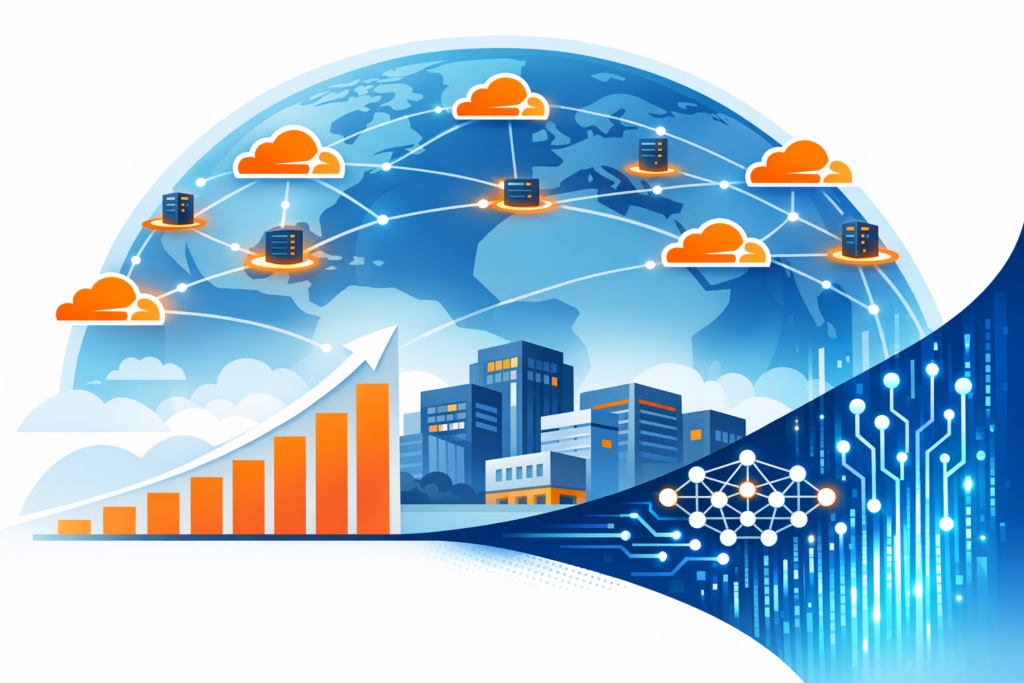

Why this matters: Artificial intelligence is moving from research labs into production systems that require massive amounts of data, compute and coordination. At the same time, blockchain-native token models are maturing as a way to align incentives across distributed marketplaces — for data, compute, model curation and secure inference. The overlap between AI and crypto is therefore not a novelty but a structural shift: tokenized networks can bootstrap AI services that are open, composable and economically efficient. For investors and builders, that creates new opportunities — and new risks.
What happened — a concise framing
Investor interest in AI-related cryptocurrencies has surged as the demand for distributed data and compute grows. Projects that combine on-chain coordination with off-chain GPU resources, decentralized data marketplaces, or token incentives for model training are attracting capital and developer activity. This trend reflects a broader thesis: that the future of AI infrastructure will be hybrid — centralized cloud for large-scale training, and decentralized, tokenized networks for data exchange, inference marketplaces, governance and edge intelligence.
Why AI crypto matters for the industry
At the intersection of blockchain and AI we see several tectonic changes:
- Tokenized Incentives for Data and Compute: High-quality labeled data and GPU cycles are scarce and fragmented. Tokens allow networks to reward contributors directly, improving dataset availability and compute pooling.
- Marketplaces and Composability: Decentralized marketplaces reduce friction for buying, selling and licensing models or datasets, enabling niche vertical ML models that centralized platforms might ignore.
- Trust and Provenance: On-chain records provide provenance for datasets and model versions, important for auditability and regulatory compliance in sensitive domains like healthcare and finance.
- Edge and Privacy-First AI: Decentralized architectures can support federated learning, MPC (multi-party computation) and TEEs (trusted execution environments) to unlock private, privacy-preserving ML services.
Who benefits — and why
- Developers and Researchers: Easier access to niche datasets, curated model hubs and affordable compute markets accelerates experimentation.
- Data Providers and Labelers: Token rewards create direct monetization pathways for people who contribute high-quality training data.
- GPU Owners and Render Farms: Owners of idle compute can monetize cycles through decentralized job marketplaces.
- Enterprises Seeking Flexible AI: Organizations that want customized models, transparent provenance and cross-vendor interoperability can leverage tokenized ecosystems.
- End Users (privacy-conscious): Users benefit from privacy-preserving AI services that do not require centralizing their raw data.
Who is threatened — and what adaptation looks like
Centralized incumbents are not eliminated overnight, but several pressures emerge:
- Cloud Providers: Tokenized compute marketplaces may undercut certain cloud use cases by offering cheaper spot capacity and specialized services, pushing cloud providers to offer hybrid solutions and native token partnerships.
- Closed AI Platforms: Companies that lock models and datasets behind walled gardens may face competition from open, community-governed model hubs that emphasize provenance, remixability and shared governance.
- Data Brokers and Intermediaries: On-chain provenance and direct token rewards reduce the need for opaque middlemen who capture the majority of data value.
Market implications and business impact
Tokenized AI networks change how value is allocated across the stack. Key implications:
- New Revenue Streams: Organizations can monetize datasets, trained models, APIs and inference endpoints directly through usage fees, staking models, or microtransactions.
- Capital Efficiency: Decentralized resource pools can reduce infrastructure cost for startups and niches by allowing pay-as-you-go access to curated compute and data.
- Regulatory Complexity: Tokenized data and compute introduce legal questions about data ownership, token classification, cross-border transfers and consumer protection — increasing compliance costs but also pushing for clearer standards.
- Speculative Volatility: Markets may price token value based not only on utility but on speculative narratives around AI, increasing short-term volatility even as long-term fundamentals evolve.
Examples of real-world use cases
1. Decentralized model marketplaces
Enterprises can purchase vertical models (e.g., radiology image interpretation, industrial defect detection) from a marketplace that preserves model lineage and provides verifiable performance metrics. Tokens pay for access, reward model maintainers and fund ongoing evaluation benchmarks.
2. Compute pooling for on-demand inference
Applications with sporadic, high-concurrency inference needs—like multiplayer game agents or live video analytics—can tap into decentralized GPU pools priced in tokens. This reduces idle capacity waste and enables cost-predictable inference bursts.
3. Privacy-preserving AI in healthcare
Hospitals can participate in federated training where local models improve with aggregated gradients without sharing raw patient data. Token incentives compensate institutions that produce high-quality updates and help govern model reuse.
4. Autonomous economic agents
Agents that negotiate, transact, and optimize supply chains can operate across tokenized marketplaces, using on-chain reputational scores and escrowed funds to coordinate multi-party workflows.
Projects and token types to watch (categories)
Rather than betting on a single “silver bullet,” consider targeted exposure across these categories:
- Data Marketplaces: Tokens that govern or mediate dataset exchange and licensing.
- Compute/Rendering Marketplaces: Tokens that pay for GPU hours or render cycles; these are asymmetric plays on compute demand.
- Model Governance and Curation: Tokens used to vote on model inclusion, benchmarks and quality gates.
- Inference-API Tokens: Networks that provide programmable inference endpoints settled on-chain for microtransactions.
Future predictions — a five-year outlook
- Hybrid architectures will dominate: Massive LLM training remains centralized for efficiency, but inference, data exchange and niche model hosting will increasingly move to decentralized, tokenized layers.
- Vertical specialization: AI token ecosystems will fracture into verticals (healthcare, finance, industrial) with domain-specific governance, benchmarks and compliance tooling.
- Regulation and standards: Expect clearer frameworks around data sovereignty, token utility classification and AI audit requirements — favoring projects that bake compliance into their design.
- Interoperability wins: Protocols enabling composable workflows across chains and off-chain compute (bridges, cross-chain data oracles) will capture outsized value.
- Economic layering: Staking, bonding curves and reputation systems will proliferate, making tokenomics a core product design choice rather than an afterthought.
Risk checklist before allocating capital
- Project utility vs. token speculation: is demand for the token tied to real usage?
- Regulatory exposure: is the token likely to be classified as a security or utility in key jurisdictions?
- Team and partnerships: does the project have credible engineering and enterprise partnerships?
- On-chain economics: are token inflation and distribution aligned with long-term incentives?
- Security posture: does the network mitigate oracle, smart-contract and data-poisoning attacks?
FAQ
Q1: Is investing in AI crypto just speculation?
Not necessarily. While price volatility and narrative-driven gains are common, certain AI tokens have direct utility — they pay for compute, data access, or governance. The key is separating tokens with real consumption-driven demand from pure meme/speculative assets.
Q2: Will decentralized AI replace cloud providers?
Unlikely in the near term. Cloud providers will remain essential for massive model training and enterprise services, but decentralized networks will complement clouds for specialized workloads, marketplace-driven models and privacy-preserving applications.
Q3: How can token models improve dataset quality?
Token rewards aligned with measurable labeling accuracy and verifiable contributions can incentivize high-quality data curation. On-chain provenance adds accountability, making it easier to trace and remediate biased or poisoned datasets.
Q4: What technical bottlenecks exist for AI crypto adoption?
Latency and throughput for on-chain coordination, secure off-chain compute orchestration, reliable oracle inputs, and robust anti-poisoning measures are major engineering challenges. Progress is rapid, but production readiness varies by project.
Q5: How should practitioners evaluate projects?
Focus on utility, partnerships with enterprises and research institutions, transparent tokenomics, auditability, and real-world pilot deployment. Active developer ecosystems and clear roadmaps matter more than marketing hype.
Conclusion
The convergence of AI and crypto is not merely a speculative headline; it represents an architectural shift in how data, compute and models are created, governed and monetized. Tokenized networks can unlock new supply-side incentives for datasets and compute, enable composable model marketplaces, and provide privacy-first pipelines that centralized platforms struggle to offer. That said, risks persist: regulatory scrutiny, token volatility and technical integration issues can hamper adoption. For investors and builders, a nuanced approach matters — prioritize projects with tangible utility, clear token-demand mechanics, and enterprise-ready governance. If executed well, targeted exposure to AI crypto ecosystems could position you at the crossroads of two of the most transformative technologies of our time.
Disclaimer: This article is for informational purposes and does not constitute financial or investment advice. Conduct your own research and consult a licensed professional before making investment decisions.