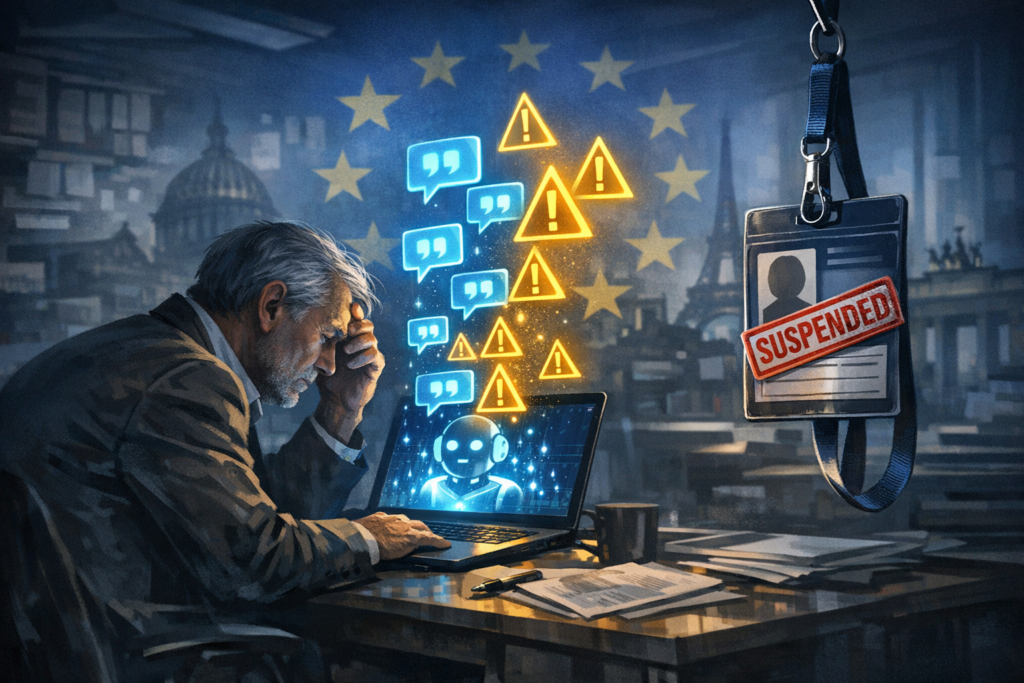

The decision by a major AI lab to recruit a weapons specialist is more than a hiring headline — it is a signal that the contours of AI risk management are shifting from abstract ethics debates to domain-specific threat engineering. As foundation models grow in capability, the potential for misuse migrates from hypothetical scenarios into concrete pathways: automated design, adversarial exploitation, and scaled dissemination of harmful knowledge. Bringing weapons expertise into AI safety teams reframes defence against misuse as a multidisciplinary engineering problem that requires lived experience in how weapons are designed, tested, and operationalized.
From high-level policy to domain fluency
AI governance conversations have long emphasized principles — transparency, fairness, alignment — but translating principles into credible mitigations requires granular threat models. A weapons expert provides exactly that: practical insights into how malicious actors think, how weapon systems are iterated, and what pieces of information are most operationally useful. This is different from academic analysis. It’s about recognizing which model outputs actually lower barriers for misuse, how tightly coupled pieces of guidance become a viable blue‑print, and where a model’s surface area might enable adversaries to automate or accelerate harmful processes.
In short, this hire represents a move from broad “misuse awareness” toward operationalized prevention: concrete testing regimes, realistic red-team scenarios, and policy rules grounded in technical and tactical realities.
How weapons expertise can change the defensive playbook
Integrating domain experts into AI safety teams can change how companies think about product design and deployment in several ways:
- More realistic red teaming: Domain-informed adversarial tests are less likely to be fantasy scenarios and more likely to expose real exploit chains — sequences of outputs that, when combined, produce dangerously actionable guidance.
- Prioritization of mitigations: Experts can help rank which failure modes are most urgent, enabling engineers to focus on controls that materially reduce risk rather than chasing low-probability threats.
- Policy nuance: Weaponization risk is not binary. Experts can advise on gradations of restriction, from outright blocking to monitored research access with audited logs and multi-party oversight.
- Engagement with regulators and defense agencies: Subject-matter authority makes private labs more credible partners for governments crafting standards and incident-response frameworks.
Technical levers informed by domain knowledge
Domain intelligence feeds into specific technical controls and operational policies. Examples include:
- Designing classifier layers to detect tactical operational content (stepwise protocols, schematics) rather than relying on keyword blocking alone.
- Implementing graduated access tiers where high-capability or high-risk query types are subject to human review and provenance checks.
- Developing monitoring signals that look for pattern-of-use anomalies indicating automated scraping or coordination toward malign ends.
- Encouraging research into model interpretability methods that reveal when the model is internally representing procedural knowledge that could be misused.
Trade-offs and new risks
While the defensive upside is real, the move raises non-trivial trade-offs.
First, concentrating operational weapons expertise inside private labs creates a supply of tacit knowledge that is both protective and risky. Experts who know how to identify vulnerabilities are also best placed to craft exploit scenarios for research and testing. Safeguards like strict compartmentalization, clear ethical boundaries, and oversight protocols are necessary to prevent the tools of defense from becoming templates for offense — whether through intentional misuse, coercion, or inadvertent disclosure.
Second, there’s a reputational tightrope. Recruiting individuals with military or weapons backgrounds can provoke public concern. Labs must explain the role and constraints of such hires, communicate transparency where possible, and pair recruitment with independent external review to maintain trust.
Third, an arms race dynamic is possible. As labs harden models against misuse, sophisticated adversaries may invest in creative workarounds: model distillation, multi-query stitching, or using models as components in larger automation pipelines. Defensive hires raise the bar, but they also signal to attackers what defenses are prioritized — potentially shifting, not eliminating, the attack surface.
Industry and regulatory ripple effects
Expect several downstream consequences if this hiring trend accelerates:
- Normalization of domain-specific safety roles: AI firms will increasingly recruit experts from public health, synthetic biology, chemical engineering, cybersecurity and now weapons or military systems to harden systems against real-world misuse.
- Pressure on standards bodies: Governments and international bodies may move toward mandating domain-informed safety practices, such as certified red-team exercises or accredited third-party audits for high-risk applications.
- Private-public collaboration: Labs may become formal partners in national security incident response frameworks, providing technical analysis during misuse events; conversely, governments may demand access to privileged knowledge during investigations, raising questions about liability and secrecy.
- Market differentiation: Safety credibility may turn into a commercial moat. Labs that can demonstrate rigorous, domain-informed safeguards may win enterprise customers, regulators’ confidence, and public trust.
Practical governance approaches to pair with hiring
Domain experts will be most effective if their work is embedded in governance processes designed to manage sensitive knowledge and align incentives. Practical measures include:
- Clear role definitions and ethical charters limiting what kinds of analysis are permissible and how findings are stored and disseminated.
- Compartmentalized test environments that simulate adversarial conditions without exposing the broader organization to toxic data or exploit code.
- Cross-industry threat-sharing frameworks that allow red-team learnings to be aggregated without revealing operationally sensitive details — think anonymized indicators rather than playbooks.
- Independent audits and oversight panels with the authority to review high-risk testing and deployment decisions.
Balancing transparency and secrecy
Transparency builds trust, but too much detail about defensive tactics or detected vulnerabilities can itself become a roadmap for adversaries. Labs need a calibrated disclosure policy: publish high-level results and mitigation outcomes, while withholding step-by-step exploit demonstrations. Where possible, share lessons learned with trusted external partners under non-disclosure arrangements so the ecosystem benefits without widening the attack surface.
Possible futures: scenarios to watch
Two trajectories illustrate how this hiring move could ripple outward.
Defensive maturation — Labs institutionalize domain-informed safety teams. Standardized red-teaming protocols emerge, third-party certifications for high-risk model deployment become common, and regulators adopt baseline safety requirements. Adversaries adapt but face higher costs, reducing the frequency and scale of misuse events.
Escalation and diffusion — The knowledge and tooling developed for defense leak or are repurposed. Attackers harness similar techniques to automate subtle exploit chains. The result is a cat-and-mouse dynamic where firms increasingly lock down models and data, bureaucracy grows, and smaller actors find it harder to enter the market — centralizing capability with a handful of well-resourced labs and states.
What comes next for AI safety strategy
Hiring domain experts is only one pillar of an effective safety posture. It works best in concert with technical controls (access management, watermarking, interpretability), robust organizational processes (ethics reviews, incident response), and external governance (standards, legal frameworks). Private labs can accelerate progress by sharing non-sensitive methodologies, funding cross-sector research on dual-use risks, and participating in coordinated disclosure programs that protect public safety without amplifying threats.
Ultimately, the move to embed weapons expertise into AI safety teams underlines a deeper maturity in the field: recognizing that governance is not an add-on but an engineering discipline that must integrate domain knowledge, operational rigor, and accountability. The next phase will test whether companies can operationalize that insight without creating new concentrations of risk.
The presence of weapons specialists on safety teams should not be read as an admission of inevitable catastrophe. Rather, it is a pragmatic acknowledgement that to keep powerful technologies in safe hands, the people defending them must understand the minds and methods they are defending against. How the industry organizes that expertise — with appropriate transparency, oversight, and cross-sector collaboration — will shape whether this era of AI yields broad public benefit or sharpens the very risks it seeks to manage.